


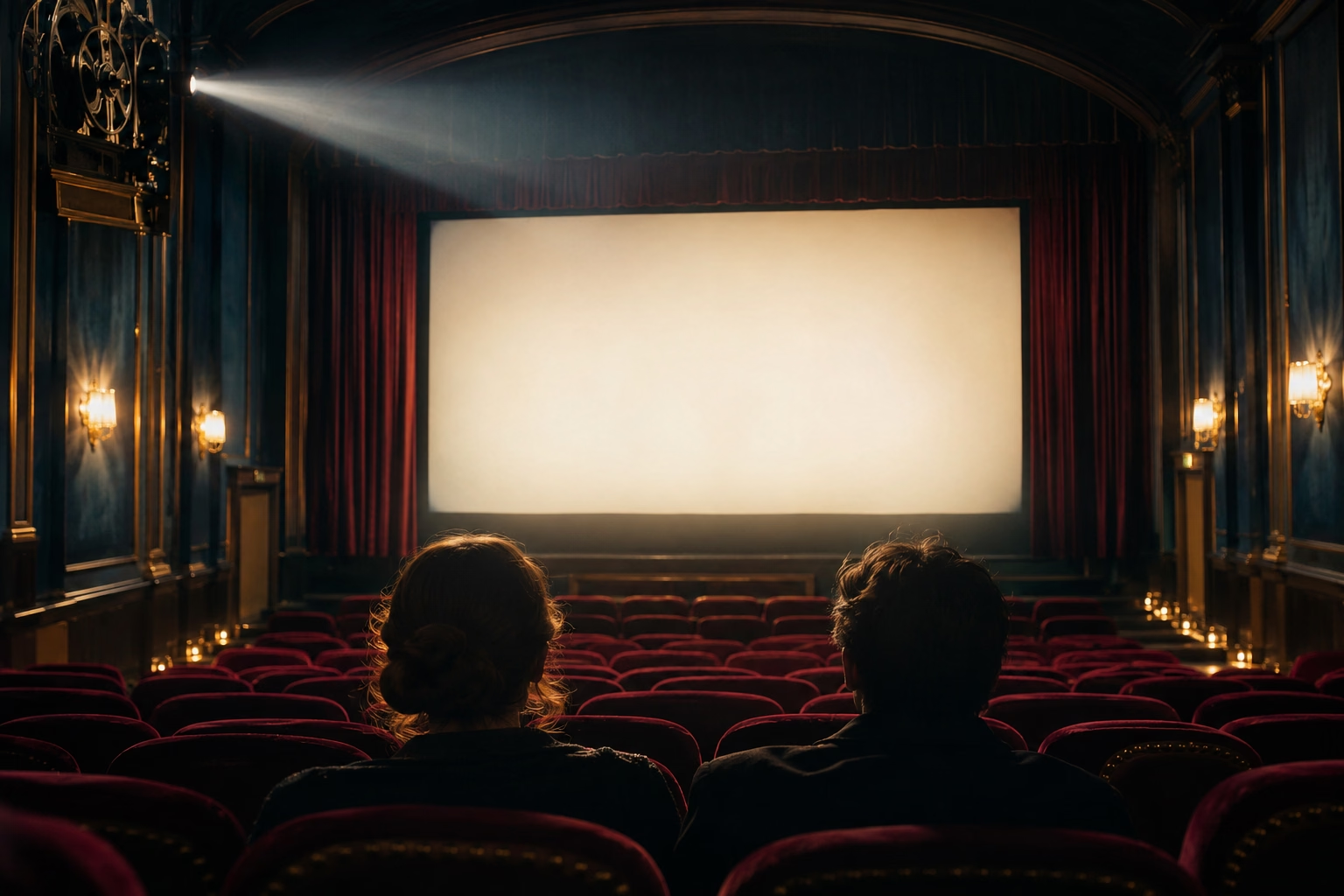
15 Essential Directors: Films That Keep You Thinking
Sometimes a film ends while the work it has begun in the viewer continues. A face returns to memory, a character becomes harder to judge, or an uncomfortable question attaches itself to something we have done. Gradually, a story becomes part of how we understand other people.
Cinema’s intellectual force emerges through the organisation of attention. A camera position can unsettle an apparent certainty. Editing can reveal tension between an event and its recollection. A pause can make something perceptible that a character cannot express.
These fifteen directors offer different versions of that experience. Their subjects include conscience, desire, family intimacy, power and the passage of time. Festival records and film institutions document their recognition; their value for an individual viewer develops through an encounter with the work.
We have chosen three films by each director: a route through 45 works, to explore at your own pace.
1. Andrei Tarkovsky: time and the pressure of conscience
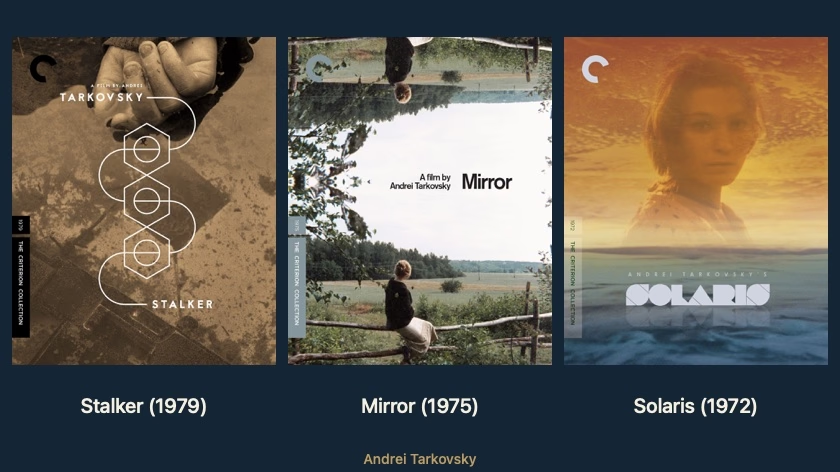
Three films: Stalker — 1979; Mirror — 1975; Solaris — 1972.
Tarkovsky places people before questions that are difficult to escape through explanation. What do they genuinely desire? What guilt can they acknowledge? Which memories continue to determine their lives?
In Stalker, the journey towards a mysterious Room tests the relationship between hope and self-knowledge. Solarisconnects an encounter with the unknown to the persistence of personal history. Mirror develops through memory’s associations, bringing childhood, collective history, a mother’s voice and poetry into a shifting relationship.
Duration is central to this cinema. Water, wind, fire, camera movement and sound gradually alter the significance of what we see. A sustained shot allows anxiety, expectation and recollection to accumulate within a single moment.
International recognition came early: Ivan’s Childhood, his first feature, won Venice’s Golden Lion in 1962. Venice Film Festival history.
Where to begin: Solaris for the meeting of science fiction and intimate drama; Mirror for an experience closer to poetry and recollection.
2. Ingmar Bergman: facing the truths we evade
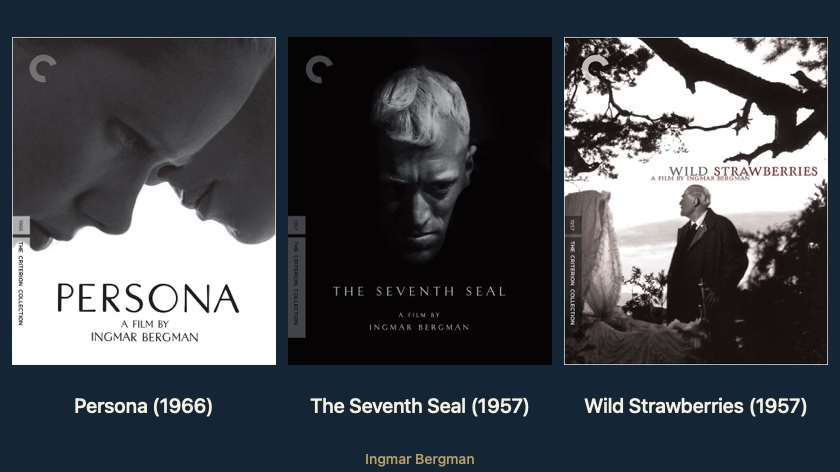
Three films: Persona — 1966; The Seventh Seal — 1957; Wild Strawberries — 1957.
Bergman can give a conversation almost physical force. His characters seek intimacy while protecting their deepest vulnerabilities. An apparent confession may contain an attempt to control; care may be entangled with fear of abandonment.
Persona investigates unstable identity and the boundary between two people. The Seventh Seal gives questions about death and belief a striking visual form through its chess game. In Wild Strawberries, an elderly professor’s journey becomes an encounter with memory and the consequences of emotional withdrawal.
The close-up is particularly powerful here. A face can contradict spoken words, while silence changes the meaning of an exchange. The viewer’s task is to stay with that ambiguity and recognise the fear beneath a character’s explanation.
Wild Strawberries received the Berlinale’s top prize in 1958. Berlinale archive.
Where to begin: Wild Strawberries, whose clear physical journey gradually opens onto a complicated inner life.
3. Federico Fellini: imagination revealing desire
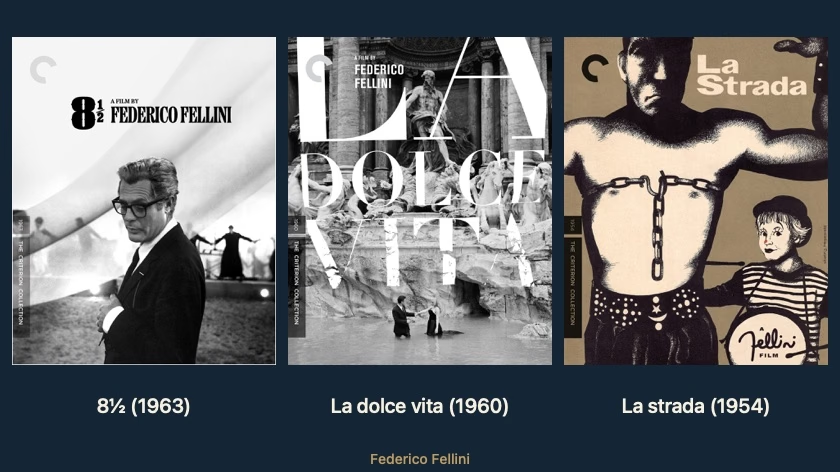
Three films: 8½ — 1963; La dolce vita — 1960; La strada — 1954.
Fellini investigates people through spectacle: celebrations, circuses, fantasies, memories and crowds. His world overflows with faces and desires. Within that abundance, loneliness becomes increasingly visible.
In 8½, a director’s creative crisis becomes an investigation into the stories people construct about themselves. Memories and fantasies expose contradictions the protagonist would prefer to avoid. La dolce vita follows a life crowded with encounters and impressions, gradually raising questions about its substance. La strada gives the meeting of cruelty and vulnerability the intensity of a fable.
Fellini’s intellectual interest lies partly in showing imagination at work. A fantasy can disclose something its creator is unable to admit. The beauty of an image draws us in, then encourages us to examine our own fascination.
8½ won the Academy Award for Foreign Language Film in 1964. Academy archive.
Where to begin: La strada offers an emotionally direct introduction; continue with La dolce vita and 8½.
4. Michelangelo Antonioni: the space between people
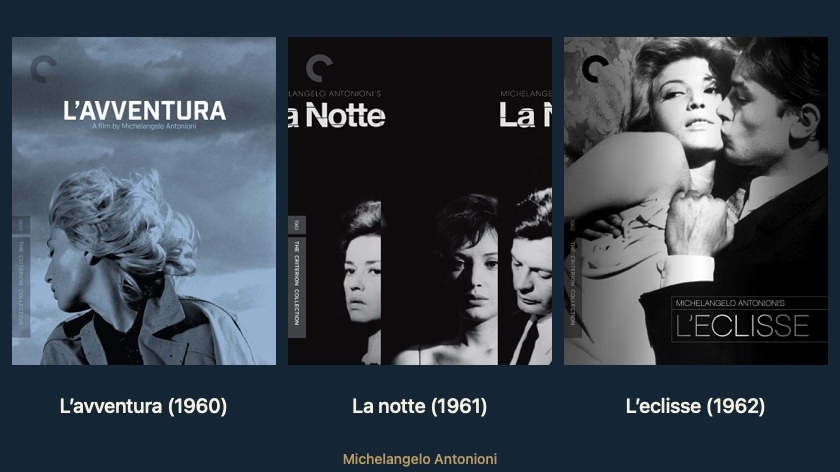
Three films: L’avventura — 1960; La notte — 1961; L’eclisse — 1962.
For Antonioni, intimacy becomes a problem that a declaration alone cannot resolve. People meet, speak and form relationships while continuing to experience an unsettling distance.
In L’avventura, a woman’s disappearance changes the direction of the narrative and draws attention to the gradual redirection of other people’s concerns. La notte examines a marriage through encounters, pauses and the movement of two people through shared space. L’eclisse places private experience beside money, urban architecture and impersonal exchanges.
Antonioni gives space psychological force. An empty street, a façade or the distance between figures participates in the exploration of feeling. Watching becomes an exercise in noticing the circumstances within which human connection grows difficult.
His international recognition includes the Cannes festival’s top prize in 1967 for Blow-Up. Cannes archive.
Where to begin: La notte. Notice how relationships change when people stand close together while directing their attention elsewhere.
5. Stanley Kubrick: intelligence inside its own systems
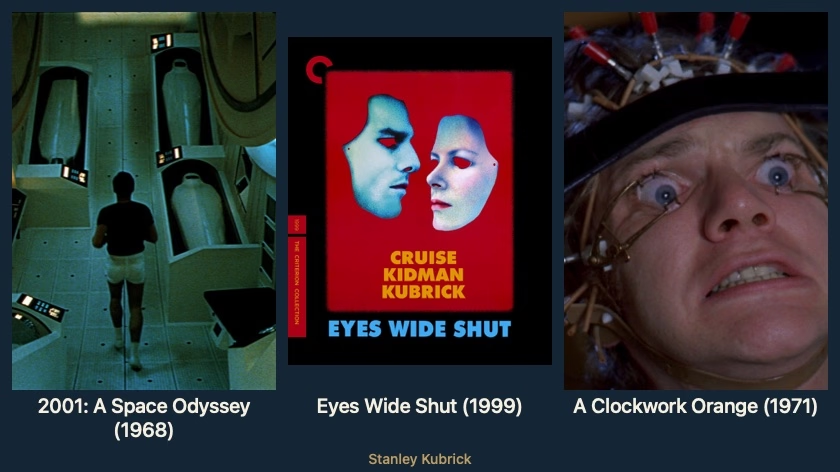
Three films: 2001: A Space Odyssey — 1968; Eyes Wide Shut — 1999; A Clockwork Orange — 1971.
Kubrick examines people within elaborate technological, political and social systems. Those systems promise security and control while revealing less visible forms of violence.
2001 brings together evolution, machine intelligence and an encounter with the unknown. A Clockwork Orange raises disturbing questions about freedom and the compulsory correction of human behaviour. In Eyes Wide Shut, jealousy and fantasy lead a man towards hierarchies he only partly understands.
Precise composition, recurring shapes, music and camera movement create a world governed by particular rules. Gradually, the viewer begins to ask who establishes those rules and who is permitted to break them.
Kubrick personally received the Academy Award for the special visual effects of 2001 at the 1969 ceremony. Academy archive.
Where to begin: choose according to your interests: space and consciousness suggest 2001; desire and social power suggest Eyes Wide Shut.
6. Akira Kurosawa: moral thought in motion
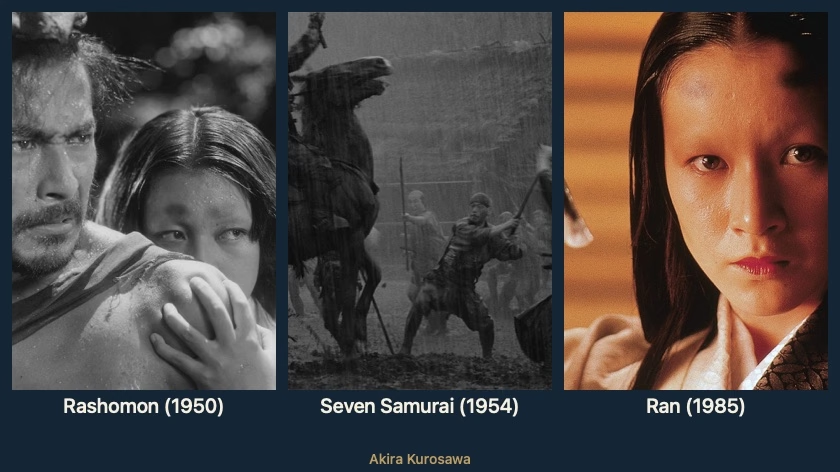
Three films: Rashomon — 1950; Seven Samurai — 1954; Ran — 1985.
Kurosawa makes thought visible through action: a decision, a collision of personalities, an attempt to preserve dignity under pressure. Dramatic momentum is inseparable from the moral cost of what people do.
In Rashomon, conflicting accounts of one event invite scrutiny of memory, self-regard and testimony. Seven Samuraiexplores solidarity between people separated by social position and experience. Ran, with its relationship to King Lear, turns the disintegration of a family and a state into a tragedy of power.
Rain, wind, the movement of groups and changing perspectives contribute to the argument. Dignity is repeatedly tested through specific obligations: whom to help, what to protect and which responsibilities to accept.
Rashomon won the Golden Lion in 1951, an event the Venice Biennale identifies as important to the international recognition of Japanese cinema. Festival history.
Where to begin: Rashomon, a concentrated and enduringly provocative exploration of how people tell the truth about themselves.
7. Robert Bresson: the ethics of a gesture
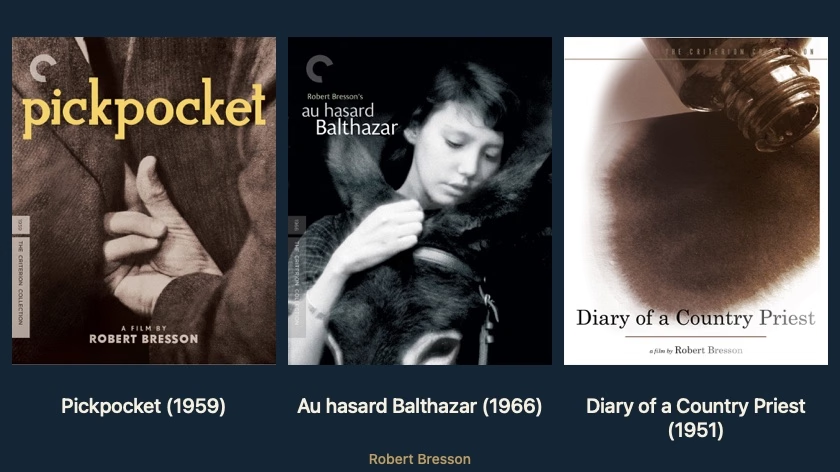
Three films: Pickpocket — 1959; Au hasard Balthazar — 1966; Diary of a Country Priest — 1951.
Bresson directs attention towards what can disappear between major dramatic events: a hand moving, a touch, a door opening, the sound of footsteps.
In Pickpocket, the precision of the protagonist’s actions exists beside the moral instability of his position. Au hasard Balthazar considers cruelty and compassion through the life of a donkey passed between owners. Diary of a Country Priest connects a man’s inner life with loneliness and a crisis of faith.
Restrained performances, the editing of separate actions and an exact use of sound ask the viewer to participate. Emotion accumulates through relationships between what is seen and heard. Questions about guilt or mercy acquire the weight of a particular act.
Au hasard Balthazar tied for twenty-fifth place in the 2022 Sight and Sound critics’ poll. BFI programme notes.
Where to begin: Pickpocket, an especially expressive demonstration of how editing and gesture can sustain a moral drama.
8. Yasujirō Ozu: a lifetime within the everyday
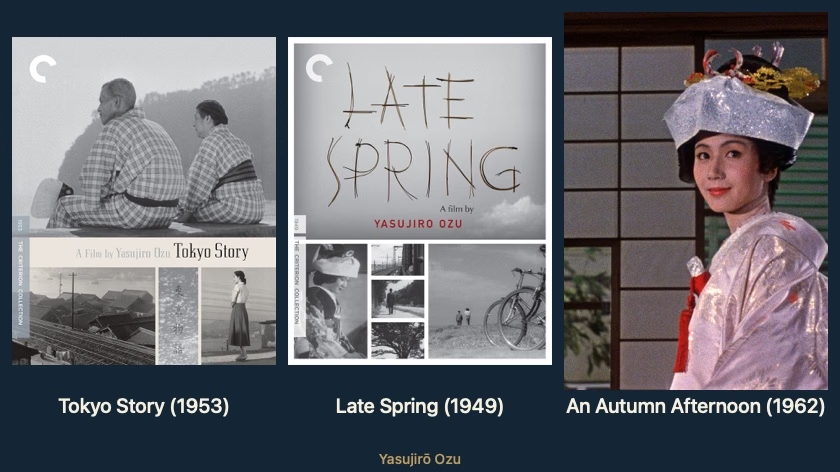
Three films: Tokyo Story — 1953; Late Spring — 1949; An Autumn Afternoon — 1962.
Ozu examines changes that can happen almost imperceptibly: children become independent, parents age and a familiar home gradually acquires a different meaning.
In Tokyo Story, an elderly couple visits their grown children, revealing a painful mismatch between expectations and what family members can offer. Late Spring explores a father and daughter facing separation. An Autumn Afternoon returns to care, solitude and the necessity of letting someone go.
Low camera positions, calm compositions and attention to domestic space create an unusual intimacy with everyday time. Intellectual depth emerges through a difficult question: how can love for another person coexist with recognition of their separate life?
Tokyo Story tied for fourth place in the 2022 Sight and Sound critics’ poll. BFI on the film.
Where to begin: Tokyo Story. Give weight to small expressions of attention, including the moments when attention is withheld.
9. Andrey Zvyagintsev: private life and moral responsibility
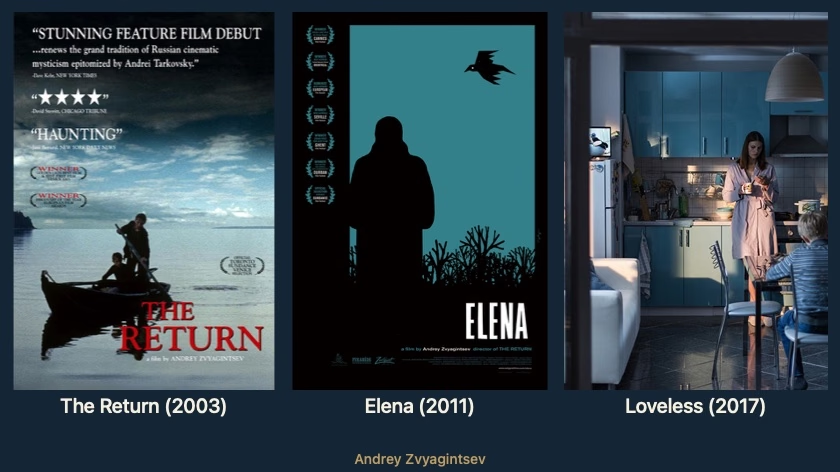
Three films: The Return — 2003; Elena — 2011; Loveless — 2017.
For Zvyagintsev, family relationships reveal power, fear, economic inequality and the capacity to take responsibility for another person.
The Return investigates paternal authority: what makes power legitimate in a child’s eyes, and how does love become entangled with demands for obedience? In Elena, loyalty to one’s family encounters the question of acceptable means. Loveless examines how resentment and the pursuit of a new life can displace attention to someone closest to us.
Carefully composed images, landscape and pauses give ordinary events the scale of a parable. His intellectual force becomes especially apparent as an individual decision reveals connections with the surrounding social order.
The Return won Venice’s Golden Lion in 2003, a milestone documented in Sony Pictures Classics’ official materials. The director and Loveless.
Where to begin: The Return, followed by Elena for a movement from an enigmatic family story into a more specific social environment.
10. Alexander Sokurov: between painting, history and dream
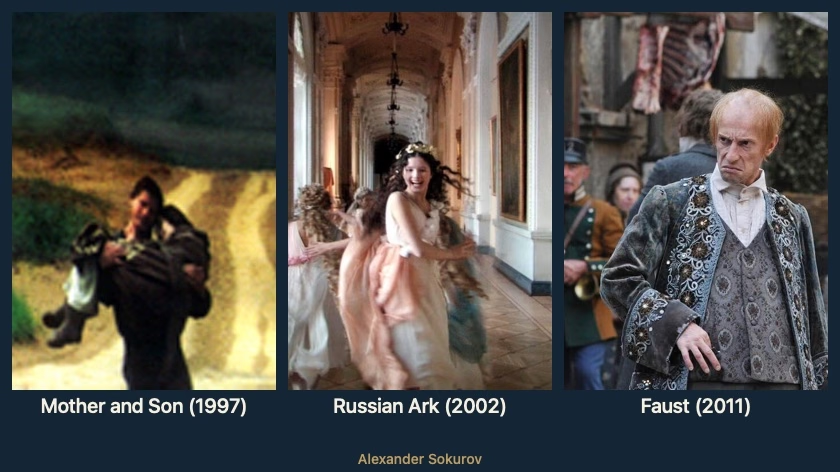
Three films: Mother and Son — 1997; Russian Ark — 2002; Faust — 2011.
Sokurov investigates human relationships with death, cultural memory and power. The ability of an image to transform our sense of the world is central to his work.
In Mother and Son, landscape and figures acquire a painterly quality, while care becomes inseparable from approaching separation. Russian Ark, constructed as one continuous shot, turns movement through the Hermitage into a journey through historical memory. Its uninterrupted image allows different periods to coexist within a shared cultural space. Gene Siskel Film Center on the film.
Faust addresses desire, knowledge and moral corruption. Distorted optics, crowded bodies and an oppressive environment make those ideas physically palpable.
Sokurov’s recognition is connected to the radical character of this visual language. Faust received the Golden Lion in 2011. Venice Film Festival history.
Where to begin: Russian Ark for art and history; Mother and Son for an intensely concentrated emotional experience.
11. Terrence Malick: a human life within the universe
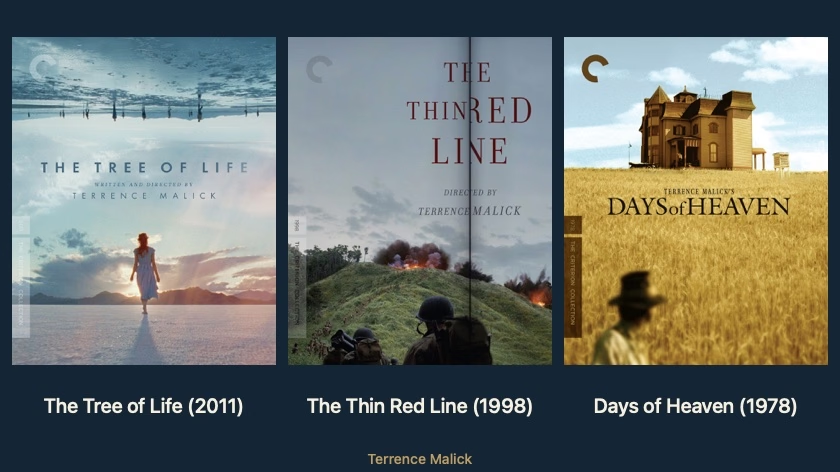
Three films: The Tree of Life — 2011; The Thin Red Line — 1998; Days of Heaven — 1978.
Malick places personal experience beside nature, history and questions about life’s origins. His camera notices light, moving grass and a touch, connecting them with human feeling.
In The Tree of Life, childhood and family loss appear alongside a cosmic scale. The Thin Red Line investigates war through multiple inner voices, relating human violence to the surrounding natural world. Days of Heaven brings labour, desire and jealousy into contact with a landscape that maintains its own existence.
Fragmented editing and questions spoken in voice-over allow thought to remain unfinished. The viewer encounters relationships between different scales: private pain, the lives of other beings and the passage of time.
The Tree of Life won the Palme d’Or in 2011. Cannes on the decade’s winners.
Where to begin: Days of Heaven offers a relatively compact introduction to his visual language; continue with The Tree of Life.
12. Michael Haneke: beneath the surface of comfort
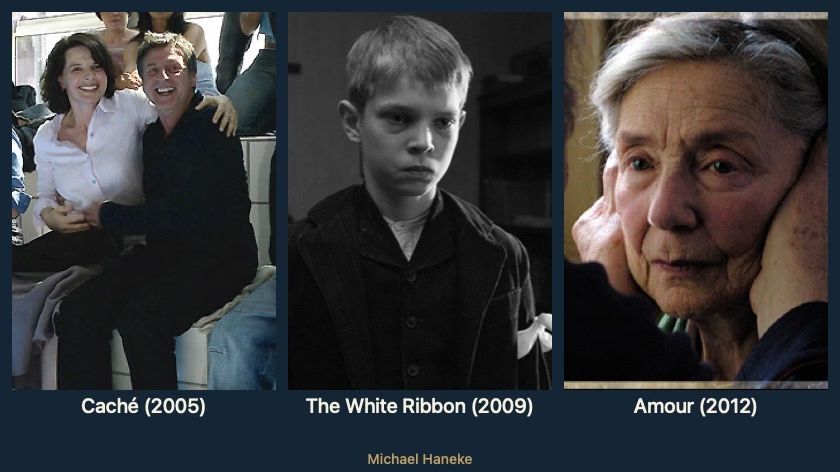
Three films: Caché — 2005; The White Ribbon — 2009; Amour — 2012.
Haneke examines the ways people defend themselves against uncomfortable knowledge. Self-justification, suppressed guilt and violence within apparently ordered lives recur throughout his work.
In Caché, anxiety about an unidentified observer opens a route towards a past the protagonist is reluctant to confront. The White Ribbon investigates relationships between education, submission and cruelty. Amour brings responsibility into the apartment of an elderly couple facing illness and growing dependence.
Exact framing and the withholding of easy emotional release involve the viewer in a moral inquiry. We have to notice our own wish to identify a culprit quickly or obtain a definitive explanation.
The White Ribbon and Amour won the Palme d’Or in 2009 and 2012 respectively. Cannes archive: 2009, 2012.
Where to begin: Amour, when you are prepared for a painful and exceptionally intimate human story.
13. Paolo Sorrentino: beauty and the life it promises
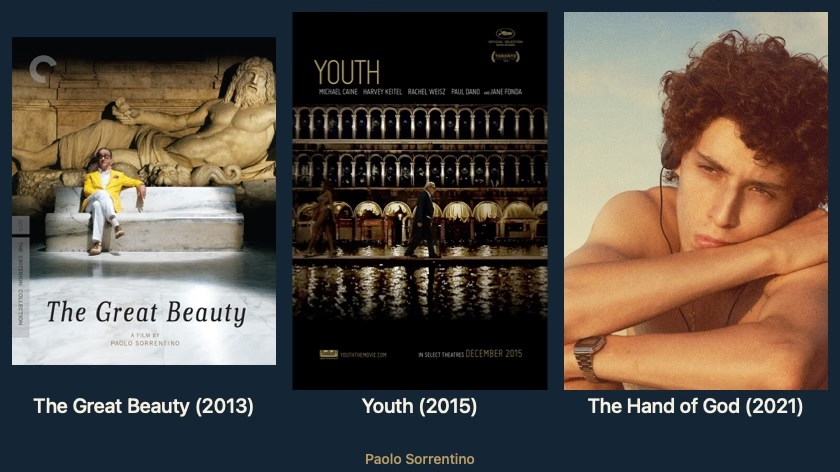
Three films: The Great Beauty — 2013; Youth — 2015; The Hand of God — 2021.
Sorrentino can make us fall in love with an image and then examine that attraction. His concerns include memory, ageing, artistic vocation and the difficulty of recognising our desires amid other people’s definitions of success.
In The Great Beauty, Roman splendour exists beside a sense of life squandered. Youth approaches age through the body, creativity, recollection and the possibility of a new decision. The Hand of God connects adolescence in Naples with family tragedy and a future filmmaker’s developing identity.
His intellectual inquiry unfolds within spectacle. Camera movement, music and carefully organised beauty create pleasure that becomes a subject for reflection: what fascinates us, and what do we hope that fascination will provide?
The Great Beauty won the Academy Award for Foreign Language Film in 2014. Academy archive.
Where to begin: The Great Beauty. Choose The Hand of God if a personal coming-of-age story appeals more strongly.
14. Wim Wenders: attention as a form of intimacy
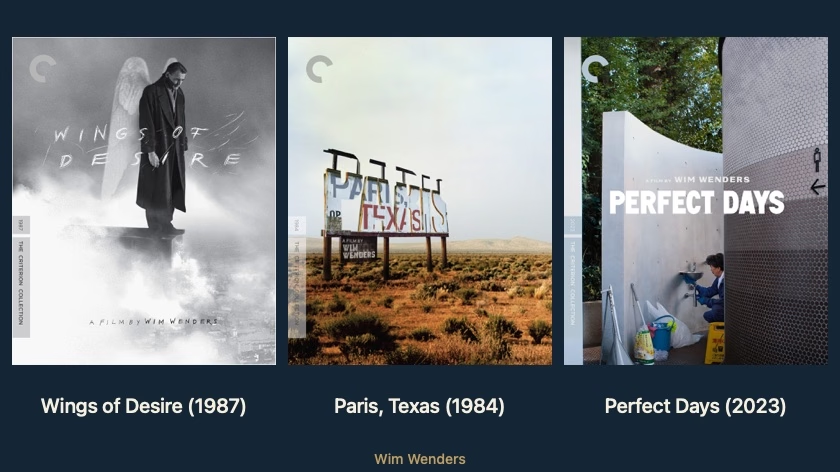
Three films: Wings of Desire — 1987; Paris, Texas — 1984; Perfect Days — 2023.
Wenders follows people seeking a closer relationship with life: listening to someone, recovering a lost connection or acknowledging the limits of their own perspective.
In Wings of Desire, the ability to observe human existence encounters a longing to experience it from within. Paris, Texasinvestigates memories of love, responsibility and the difficulty of an honest conversation. In Perfect Days, a Tokyo cleaner’s daily routine gradually reveals a rich network of relationships with music, books, trees and other people.
Landscape, roads and sound help make distance between characters perceptible. Attention to ordinary experience gives a philosophical question a concrete form: how can we inhabit our lives while recognising someone else’s separate existence?
Paris, Texas won the Palme d’Or in 1984. Bibliothèque nationale de France catalogue.
Where to begin: Perfect Days offers a gentle introduction; Paris, Texas makes the inquiry into intimacy considerably more painful.
15. Lars von Trier: testing our moral explanations
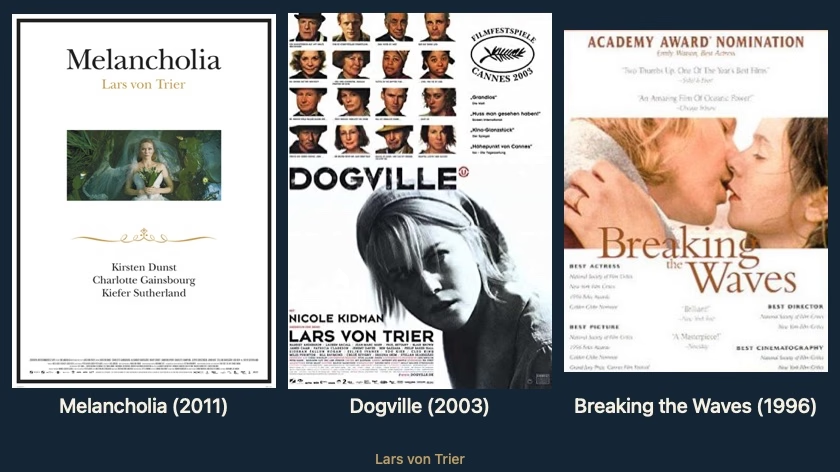
Three films: Melancholia — 2011; Dogville — 2003; Breaking the Waves — 1996.
Von Trier constructs situations in which familiar words — love, mercy, faith and justice — begin to require painful qualification.
In Breaking the Waves, devotion and religious feeling become entangled with a woman’s vulnerability and the cruelty around her. Dogville examines how a community explains its own violence. Its schematic setting, marked out on a floor, asks the viewer to complete the town imaginatively while observing mechanisms of exploitation. In Melancholia, an inner catastrophe acquires a cosmic scale.
Intellectual tension is inseparable from emotional pressure. Viewers have to examine the grounds of their sympathy, anger and desire for retribution. This is among the route’s most demanding sections: the films engage with violence, despair and destructive forms of dependence.
His international recognition includes the Palme d’Or for Dancer in the Dark in 2000. Cannes archive.
Where to begin: Melancholia, if the meeting of psychological drama and an image of the world’s end interests you.
How to Explore This Route
Choose a film whose question touches your life now. Family distance suggests Ozu. Memory and conscience suggest Tarkovsky. Desire and self-deception suggest Kubrick. Everyday attention suggests Wenders. Creativity and personal history suggest Fellini or Sorrentino.
During the film, notice one expressive decision: the arrangement of people within a frame, the arrival of music, something kept outside the image, or a scene continuing after the conversation has ended.
Afterwards, formulate a thought you are prepared to defend and identify a detail that complicates it. A worthwhile conversation about cinema often begins with that tension.
Gradually, the directors begin to speak to one another. A family scene in Wenders may carry an echo of Ozu; Sorrentino’s spectacle may reopen a question posed by Fellini. A personal relationship with cinema takes shape through favourite filmmakers, substantial disagreements and films you want to encounter again.
Если вам понравилась эта статья — будем рады, если вы ею поделитесь


