


How to Understand Contemporary Art and Form Your Own Judgement
A gallery can make you feel as though you missed an essential explanation. Objects lie on the floor, noise comes from a speaker, a wall carries an almost empty surface. Other visitors look absorbed. You examine your own response and begin to suspect it is insufficiently cultured.
That uncertainty is a perfectly reasonable starting point. Contemporary art brings together many practices, each making different demands on attention. It helps to develop a few habits as a viewer: look carefully, notice how a work is constructed, investigate its context and explain your assessment.
Gradually, confusion becomes curiosity, and the encounter acquires substance.
Begin with what is in front of you
Spend a few minutes with the work before reading its explanation. Notice materials, scale, position, light and sound. What repeats? Which detail interrupts the pattern? Does your impression change as you approach or walk around it?
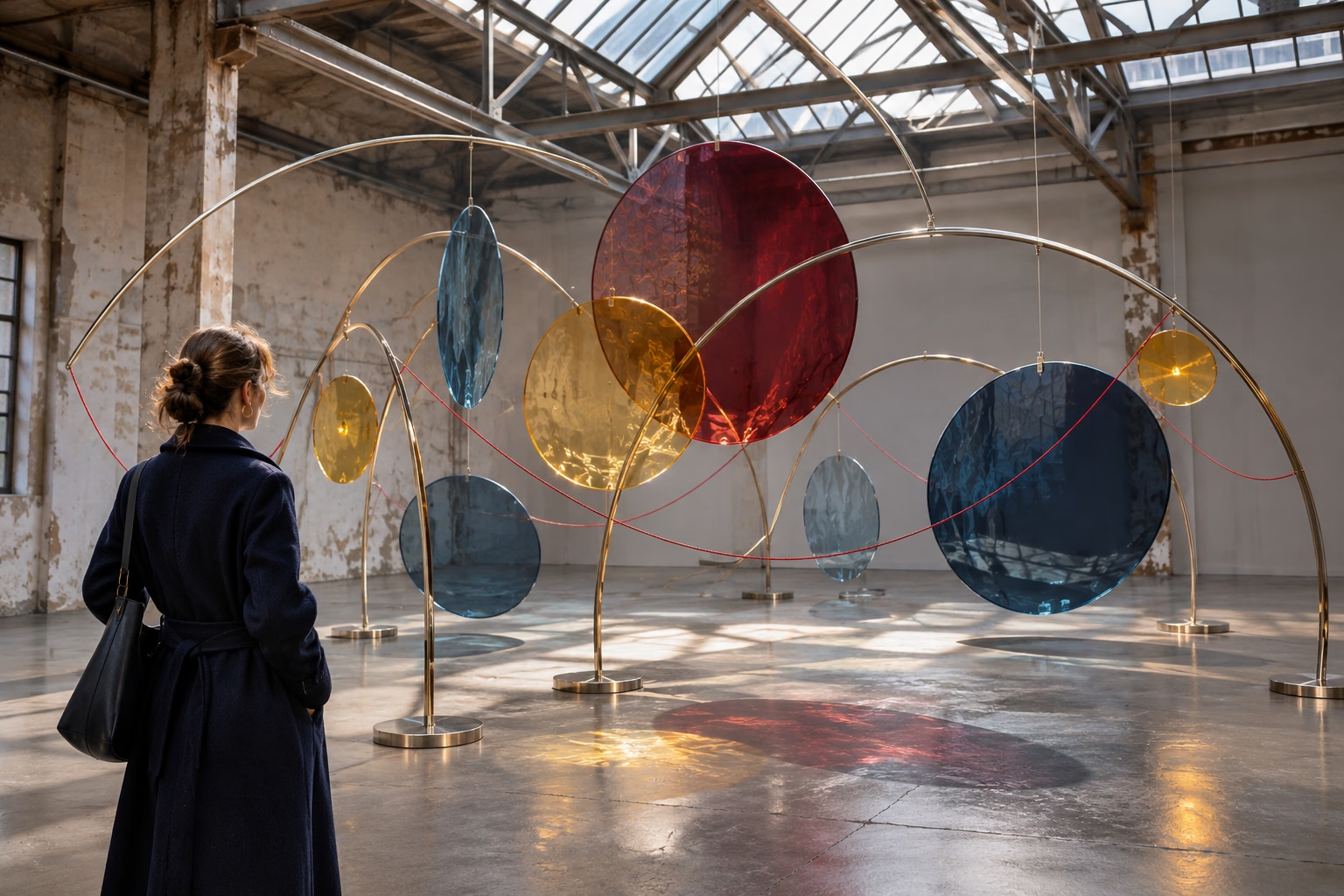
Imagine an installation made of glass, wires and moving components. You might immediately suppose that it concerns the organisation of modern society. First, though, try noticing something specific: one element moves and produces a sound, another remains still, and a pause develops between them.
An interpretation now has something to stand on. You can identify the observations that led you towards a particular thought.
Establish what the artist has done
An artwork may involve painting, assembling, selecting an object, relocating it, writing an instruction or organising a collective action. The process affects which questions are worth asking.
A historical example is Marcel Duchamp’s Fountain. In 1917, he submitted a manufactured urinal as a work of art. This gesture helps explain many subsequent artistic practices: the choice of an object and the circumstances of its presentation become significant.
Discussion inevitably reaches the boundaries of art. Who has the authority to determine them? How does our relationship with an object change when it enters an artistic context?
An independent judgement begins with understanding the action you are being invited to assess.
Read the explanation, then return to the work
After the first encounter, check the title, date and artist’s or curator’s commentary. Find out the circumstances in which the work originated, the history it addresses and why particular materials were chosen.
Then look again.
Suppose the explanation describes an investigation into memory. Which decisions make that subject available to experience or thought? Repetition, a disappearing image, duration, a familiar object? How convincing is the relationship between the stated idea and the work’s construction?
Context opens additional possibilities for understanding. You retain the freedom to examine how effectively the work supports the explanation offered.
Give the form time to have an effect
In Against Interpretation, Susan Sontag criticises the habit of reducing an encounter with art to the decoding of hidden content. Her argument is especially useful when the desire to explain everything immediately begins to obstruct perception itself.
Notice the rhythm of a video, the roughness of a surface or the distance between objects. What happens to your attention? Do you want to move closer, step away, listen or wait for the next change?
These responses provide material for thought. Sometimes meaning develops through duration, scale or the physical experience of a space. It needs time to become discernible.
Give your assessment reasons
Being bored is an honest beginning. Continue the thought: repetition produces no new distinctions, the material seems arbitrary, or the work delivers too little of what its explanation promises.
Another response is possible: limited means unexpectedly hold your attention, and an apparently simple form gradually reveals complexity.
In either case, one question is useful: could you explain your assessment to someone who disagrees? Identify a specific detail and show how it supports your conclusion.
For your next visit, choose a single work. Remember three observations, formulate a question and attempt a provisional judgement. Another encounter may change your mind.
A viewer’s independence develops through this practice. You notice more carefully, explain your responses more precisely and enter the conversation with greater confidence.
Если вам понравилась эта статья — будем рады, если вы ею поделитесь


